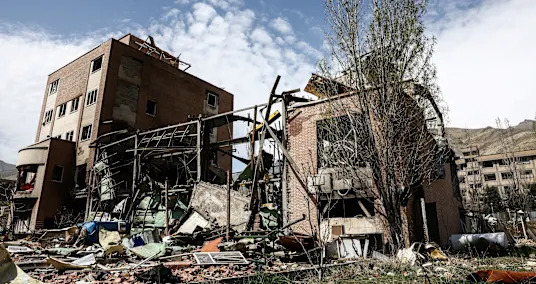
In Tehran, a city of nine million people, schools are closed, businesses are shuttered or struggling, and locals are living without a functioning air-raid warning system or public shelters. In many areas, the first sign of an incoming strike is the explosion itself.
There have been twice as many US and Israeli attacks on Iran compared to the number of Iranian retaliatory strikes since the war began — and the numbers killed in Iran have been orders of magnitude greater than in the neighboring Gulf states. A nationwide internet blackout, now entering its second month, has left civilians unable to access information about safety, shelter, and food and has meant some are unable to work. But while millions have fled Iran’s cities, many more are staying where they are. Some residents are hoping the US and Israeli bombs will cause the regime to collapse; others are left wondering if they are at risk if their neighbors are targeted.
For the many Iranians with ties to Dubai, there are other pressures, with Iranian nationals now barred from entering or transiting through the UAE. Residency permits, even for those with long-term Golden Visas, are reportedly being revoked without notice.

latest_posts
- 1
 The wolf supermoon will kick off 2026 with a celestial bang. Here's when and how to see it.
 - 2Don't miss Jupiter shining close to the waning gibbous moon on Dec. 7
- 3Authentic Urban areas: Rich Legacy and Lively Societies
- 4Extraordinary Picks for Home Apparatuses: Making Life Simpler
- 5Influencers are selling a delusional fantasy of being postpartum. Why is it so easy to believe?




- True to life Authenticity d: A Survey of \Certifiable Stories\ Narrative
- Artemis II astronauts find hidden Easter eggs as they close in on the moon
- You finally got a doctor's appointment. Here's how to get the most out of it
- Manual for Purchasing a Modest Jeep Wrangler for Seniors
- NASA's Perseverance Mars rover could break the record for miles driven on another planet
- What's the Fate of 5G Innovation?
- The 15 Most Rousing TED Chats on Self-awareness
- Story of ‘first Black Briton’ rewritten by advances in ancient DNA technology
- We tasted one of the 10,000 Hershey's Dubai chocolate bars being resold on eBay. Is it worth the hype?